Research Article
Issue Editorial Board





Aim & Scope
The journal aims to promote original research papers in the area of Chaos Theory and Applications (CHTA) to include practical innovations in Applied Sciences and Engineering. The journal aims to publish in as much detail as possible scientific advances in the field of chaos theory and applications with a focus on the practical and theoretical.
The journal publishes regular papers dealing with the following areas, but not limited to:
- Chaos theory and chaotic systems,
- Recent developments in chaos-based engineering applications,
- Chaos in finance and blockchain,
- Fractional-order chaotic systems,
- Design of analogue circuits of chaotic systems,
- Mem-elements-based systems,
- Chaos-based embedded system applications
- Deterministic and random vibrations,
- Mathematical modelling and chaos analysis in engineering,
- Complexity in physical, social and biological systems,
- Applications to biomedical, data security, control,
- Chaos and its dynamics in biological networks,
- Chaos and complexity in education,
- Applications in astrophysics, space, geophysics, theoretical and structural chemistry, biophysics, social systems, power grids, image and time series processing.
------------------------------------------------------------------------------------
Research Areas (Categories / Classification) -Web of Science category
- Life Sciences & Biomedicine: Mathematical & Computational Biology, Life Sciences Biomedicine Other Topics.
- Physical Sciences: Chemistry, Mathematics, Physics, Optics.
- Social Sciences: Business & Economics, Social Sciences Other Topics.
- Technology: Automation & Control Systems, Computer Science, Engineering, Mechanics, Science & Technology Other Topics.
Author Guidelines
You can send your paper any format in the first version. If your paper is accepted, you must provide the items required for the publication of your article (Your Paper Your Way). The Paper Template (Latex files) can be downloaded from the following link,
Paper Template: chta_template
When submitting a paper, the author should check that he or she has the right to publish it and that it does not contain any defamatory material. The CHTA will assume that all co-authors have agreed to the paper's submission. The corresponding author should sign the journal copyright form on behalf of all co-authors and upload it to the Journal's Submission System. Copyright Form of the paper can be downloaded from the following link,
Copyrigth Form: Copyright Form
The journal publishes previously unpublished manuscripts that will have a high impact in the field of chaos theory and applications in applied sciences and engineering. It targets not only certain field specialists but the wider public also. Papers should be submitted in Microsoft Word (*.doc, *.docx) or pdf format. Copyright Form has to accompany each submission.
Abstract: It should not exceed 300 words.
Keywords: It should start with a bold “Keywords” title and should not exceed six keywords.
Introduction: For the introduction, authors should be mindful of the broad readership of the journal. The introduction should set the stage for the importance of the work to a generalist reader and draw the reader into the specific study. The scope and impact of the work should be clearly stated.
Co-Authorship: Place the author's name, affiliation and full address under the title. The affiliation and full addresses of each co-author must be specified in the case of multiple authorship of a submitted article. If more than one writer is present, please indicate clearly with an asterisk(*) who will handle the correspondence at all levels of refereeing and publishing, including post-publishing. Any alteration in the author names listed in the original manuscript, including additions, deletions, and/or changes in appearance order, requires proof of consent from all co-authors. When the paper is approved, it is forbidden to further switch co-authors.
* The journal only accepts the submission of manuscripts in English.
Ethical Principles and Publication Policy
- Author(s) must submit original studies to the journal. If they utilize or use other studies, they must make the in-text and end-text references accurately and completely.
- People who have not contributed to the study at the intellectual level should not be indicated as author.
- If the manuscripts submitted to be published are subject of conflicting interests or relations, these must be explained.
- During the review process of their manuscripts, author(s) may be asked to supply raw data. In such a case, author(s) should be ready to submit such data and information to the editorial and scientific boards.
- Author(s) should document that they have the participants' consent and the necessary permissions related with the sharing and research/analysis of the data that are used.
- Author(s) bears the responsibility to inform the editor of the journal or publisher if they happen to notice a mistake in their study which is in early release or publication process and to cooperate with the editors during the correction or withdrawal process.
- Authors cannot submit their studies to multiple journals simultaneously. Each submission can be made only after the previous one is completed. A study published in another journal cannot be submitted to Chaos Theory and Applications. Author responsibilities given in a study (e.g.: adding an author, reordering of author names) whose review process has begun cannot be changed.
Ethical Responsibilities of Editors
The editor and field editors of Chaos Theory and Applications should hold the following ethical responsibilities that are based on the guides "COPE Code of Conduct and Best Practice Guidelines for Journal Editors" and "COPE Best Practice Guidelines for Journal Editors" published as open Access by Committee on Publication Ethics (COPE).
- Making efforts to meet the demand for knowledge from readers and authors
- Ensuring the continuous development of the journal,
- Managing the procedures aimed to improve the quality of the studies published in the journal,
- Supporting freedom of expression,
- Ensuring academic integrity,
- Following the procedures without making concessions on intellectual property rights and ethical standards,
- Being transparent and clear in issues that require correction or explanation.
Editors have the following duties and responsibilities in their relations with authors:
- Editors must make positive or negative decisions about the studies' importance, originality, validity, clarity in wording and suitability with the journal's aims and objectives.
- Editors must accept the studies that are within the scope of publication into pre review process unless there are serious problems with the study.
- Editors must not ignore positive suggestions made by reviewers unless there are serious problems with the study.
- New editors, unless there are serious issues, must not change the previous editor's decisions about the studies.
- "Blind Review and Review Process" must be published and editors must prevent possible diversions in the defined processes.
- Authors should be provided with explanatory and informative feedback.
Relationships with Reviewers
Editors have the following duties and responsibilities in their relations with reviewers:
Editors must
- Choose reviewers according to the subject of the study.
- Provide the information and guidance reviewers may need during the review process.
- Observe whether there are conflicting interests between reviewers and authors.
- Keep the identities of reviewers confidential in blind review.
- Encourage the reviewers to review the manuscript in an unbiased, scientific and objective tone.
- Develop practices and policies that increase the performance of reviewers.
- Take necessary steps to update the reviewer pool dynamically.
- Prevent unkind and unscientific reviews.
- Make effort to ensure the reviewer pool has a wide range.
Relationships with the Editorial Board
Editors must make sure that the members of the editorial board follow the procedures in accordance with the publication policies and guidelines, and must inform the members about the publication policies and developments. Moreover, editors must
- Ensure that the members of the editorial board review the manuscripts in an unbiased and independent manner.
- Select the new members of the editorial board from those who can contribute to the journal and are qualified enough.
- Send manuscripts for review based on the subject of expertise of the editorial board members.
- Regularly communicate with the editorial board.Arrange regular meetings with the editorial board for the development of publication policies and the journal.
Relationships with the Journal's Owner and Publisher
The relationship between the editors and publisher is based on the principle of the independency of editors. All the decisions made by the editors are independent of the publisher and the owner of the journal as required by the agreement made between editors and publisher.
Editorial and Blind Review Processes
Editors are obliged to comply with the policies of "Blind Review and Review Process" stated in the journal's publication policies. Therefore, the editors ensure that each manuscript is reviewed in an unbiased, fair and timely manner.
Quality Assurance
Editors must make sure that articles in the journal are published in accordance with the publication policies of the journal and international standards.
Protection of Personal Information
Editors are supposed to protect the personal information related with the subjects or visuals in the studies being reviewed, and to reject the study if there is no documentation of the subjects' consent. Furthermore, editors are supposed to protect the personal information of the authors, reviewers and readers.
Encouraging Ethical Rules and Protection of Human and Animal Rights
Editors are supposed to protect human and animal rights in the studies being reviewed and must reject the experimental studies which do not have ethical and related committee’s approval about the population given in such studies.
Precautions against possible Abuse and Malpractice
Editors are supposed to take precautions against possible abuse and malpractice. They must conduct investigations meticulously and objectively in determining and evaluating complaints about such situations. They must also share the results of the investigation.
Ensuring Academic Integrity
Editors must make sure that the mistakes, inconsistencies or misdirections in studies are corrected quickly.
Protection of Intellectual Property Rights
Editors are responsible for protecting the intellectual property rights of all the articles published in the journal and the rights of the journal and author(s) in cases where these rights are violated. Also, editors must take the necessary precautions in order to prevent the content of all published articles from violating the intellectual property rights of other publications.
Constructiveness and Openness to Discussion
Editors must
- Pay attention to the convincing criticism about studies published in the journal and must have a constructive attitude towards such criticism.
- Grant the right of reply to the author(s) of the criticized study.
- Not ignore or exclude the study that include negative results.
Complaints
Editors must examine the complaints from authors, reviewers or readers and respond to them in an explanatory and enlightening manner.
Political and Economic Apprehensions
Neither the owner of the journal, publisher or any other political or economical factor can influence the independent decision taking of the editors.
Conflicting Interests
Editors, acknowledging that there may be conflicting interests between reviewers and other editors, guarantee that the publication process of the manuscripts will be completed in an independent and unbiased manner.
Ethical Responsibilities of Reviewers
The fact that all manuscripts are reviewed through "Blind Review" has a direct influence on the publication quality. This process ensures confidentiality by objective and independent review. The review process at CHTA is carried out on the principle of double blind review. Reviewers do not contact the authors directly, and the reviews and comments are conveyed through the journal management system. In this process, the reviewer views on the evaluation forms and full texts are assigned to the author(s) by the editor. Therefore, the reviewers doing review work for CHTA are supposed to bear the following ethical responsibilities:
Reviewers must
- Agree to review only in their subject of expertise.
- Review in an unbiased and confidential manner.
- Inform the editor of the journal if they think that they encounter conflict of interests and decline to review the manuscript during the review process.
- Dispose the manuscripts they have reviewed in accordance with the principle of confidentiality after the review process. Reviewers can use the final versions of the manuscripts they have reviewed only after publication.
- Review the manuscript objectively and only in terms of its content and ensure that nationality, gender, religious and political beliefs, and economic apprehension do not influence the review.
- Review the manuscript in a constructive and kind tone, avoid making personal comments including hostility, slander and insult.
- Review the manuscript they have agreed to review on time and in accordance with the ethical rules stated above.
Ethical Responsibilities of Publisher
The Editors and the Editorial Board of CHTA are conscious of the fact that they must observe the ethical responsibilities below and act accordingly:
- Editors are responsible for all the processes that the manuscripts submitted to CHTA will go through. Within this framework, ignoring the economic or political interests, the decision-makers are the editors.
- The publisher undertakes to have an independent editorial decision made.
- The originality of the manuscript submitted is the responsibility of the publisher. Submission, plagiarism, and self-plagiarism must be avoided by writers. Manuscript submission in the CrossCheck server (http:/www.ithenticate.com/) will be checked for plagiarism. iThenticate is a system that tests the originality of the submitted material and helps detect plagiarism. Authors can also use iThenticate to display their own credentials prior to submission.
- The publisher protects the intellectual property rights of all the articles published in CHTA and holds the responsibility to keep a record of each unpublished article.
- The publisher bears all the responsibility to take the precautions against scientific abuse, fraud and plagiarism.
Unethical Behaviour
Should you encounter any unethical act or content in CHTA apart from the ethical responsibilities listed above, please notify the journal by e-mail at journalofchta@gmail.com.
Price Policy
All papers in Chaos Theory and Applications (CHTA) are published under Open Access. To provide readers with free access and to cover the costs of peer review, copyediting, typesetting, promotion, technical support, and journal management, to manage the various minimum costs associated with handling and editing the submitted manuscripts, an article processing charge (APC) of USDT, USD $330 (which is not refundable) is applied to any paper submitted after July 1st, 2023.
Once an article is accepted, the corresponding author will be notified that payment is due, and need to arrange the payment promptly. Instructions for fee transfer will be provided by the journal team with the notification of acceptance for the accepted papers.
50% discount is applied for authors who have served as reviewers in Chaos Theory and Applications journal in the last year. There is no charge for members of the journal boards.
For submissions to Chaos Theory and Applications when the corresponding author is based in any of the countries provided below, submission fees are automatically waived 100%.
Countries eligible for a full (100%) waiver: Afghanistan, Angola, Albania, Algeria, Azerbaijan, Bangladesh, Bosnia and Herzegovina, Cameroon, Chad, Ethiopia, Gambia, Ghana, Haiti Kenya, Kazakhistan, Kiribati, Kyrgyzstan, Kosovo, Libya, Lebanon, Mali, Mozambique, Morocco, Myanmar, Nepal, Niger, Nigeria, Pakistan, Palestine, Senegal, Somalia, Sudan, Togo, Tatarstan, Tajikistan, Tunisia, Turkestan, Uganda, Ukraine, Uzbekistan, Venezuela, Yakutia, Yemen, Zambia, Zimbabwe.
Indexes









Journal Boards
Honorary Editorial Board

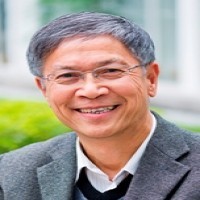
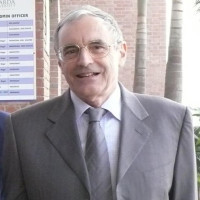
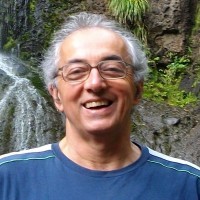
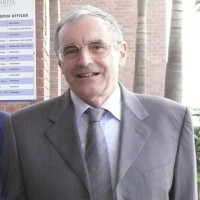
René LOZI is emeritus Professor at University Cote d’Azur, Dieudonné Center of Mathematics, France. He completed a PhD in 1975 and the French State Thesis (on chaotic dynamical systems) under the supervision of Prof. Rene Thom (Fields medalist) in 1983.In 1991, he became Full Professor at University of Nice and IUFM (Institute for teacher trainees). He has served as Director of this institute (2001-2006) and as Vice-Chairman of the French Board of Directors of IUFM (2004- 2006). He is a member of several editorial boards of international journals. In 1977, he discovered a particular mapping of the plane having a strange attractor (now, commonly known as "Lozi map"). Nowadays, his research areas include complexity and emergence theory, dynamical systems, bifurcations, control of chaos, cryptography based on chaos, and recently memristors (physical devices for neurocomputing) and artificial intelligence. He is working in those fields with renowned researchers from many countries. He received the Dr. Zakir Husain Award 2012 from the Indian Society of Industrial and Applied Mathematics during the 12th biannual conference of ISIAM at the University of Punjab, Patialia, (India) in January 2015. He received the C.S. Hsu Award 2024 for distinguished scholars in Nonlinear Dyanamics and Control, issued annually by the Nonlinear Science and Complexity Conferences Series, in August 2024 at the Sichan university of Yibin, China. Since August 2023, he is Vice-President of the International Society of Difference Equations.
Editor-in-Chief
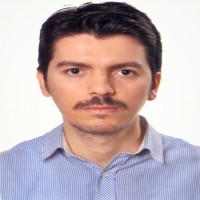
Dr. Akif AKGUL was born in Izmir, Turkey. Dr. AKGUL received his B.S. degree in Electronics-Computer Education from Kocaeli University in 2009 and in Electrical-Electronics Engineering from Sakarya University in 2013, M.S. and Ph.D. degrees from Sakarya University in 2011 and 2015, respectively, in Electronics-Computer Education and Electrical-Electronics Engineering. His Ph.D. thesis work was on chaos-based cryptology. He has been to The Institute of Electronics, Communications and Information Technology (ECIT) of Queen's University Belfast, United Kingdom in 2015 as a Visiting Researcher. His current research interests include random number generators, cryptology, data hiding, blockchain, IoRT, chaos-based engineering applications. Currently, he is Associate Professor at the Department of Computer Engineering, Faculty of Engineering, Hitit University, Turkey, where he has been involved in projects concerning the study of chaos-based applications.
Associate Editors

Professor Vinod Patidar is a Fellow of the Executive Leadership Academy (ELA) at University of California Berkeley, the Institution of Engineering and Technology (IET) and the Institution of Electronics and Telecommunication Engineers (IETE) of India. He has around 24 years (19 years post PhD; 9 Years as Full Professor) of rich experience in teaching, research and administration. An internationally acclaimed and awarded researcher in the areas of Nonlinear Dynamics and Chaos Theory, Modelling and Simulation, Chaos-based Cryptography and Image Encryption, steganography, and DNA Cryptography. Prof. Patidar has around 95 publications and over 4670 citations to his credit with an individual h-index of 23 and i10-index of 38. One of his papers has also received MOST CITED PAPER AWARD for Image and Vision Computing (Elsevier) journal and four of his research papers on ‘chaos-based cryptography’ have remained in the Sciencedirect top 25 lists of most downloaded articles published in the respective journals during various periods.
He has been a Visiting Scientist at the Helmholtz Institute for Supercomputational Physics, University of Potsdam, Germany and the International Centre for Theoretical Physics (ICTP), Trieste.
He has visited Germany, Italy, Greece, Canada, Nepal, Brazil, South Korea and United Kingdom for various academic/research purposes. He has been awarded various research & travel fellowships /grants/awards like DST Young Scientist Research Grant, SERB-MATRICS Grant, COSTED Travel Fellowship, CIMPA-ICPAM Travel Grant (twice in 2004 & 2010), DST International Travel Grant (twice in 2009 & 2012), CCSTDS Travel Fellowship, NBHM Travel Grant (twice in 2010 & 2011), Faraday Bursary (Faraday Institute, University of Cambridge), ICTP (Italy) Guest Scientist Grant, ICIAM Funding (twice in 2011 & 2015), ICM-2014 Nanum Travel Grant, ICM-2018 Open Arms Grant, CSIR Travel Grant, UGC Junior and Senior Research Fellowships, etc. Overall, he has mobilized around INR 5 Million for various research-related activities.
He is an Associate Editor of the Dynamical Systems Section of Frontiers in Applied Mathematics and Statistics (FAMS), Image Processing section of Frontiers in Signal Processing, Chaos Theory and Applications (CTA), Section Editor of Current Indian Science and a Reviewer of more than 45 international journals published by Elsevier, World Scientific, AIMS, AIP, IoP, IET, Springer, SPIE, IEEE etc. He is a Senior Member of IEEE, IEEE Signal Processing Society, IEEE Information Theory Society, IEEE Computer Society, International Association of Computer Science and Information Technology (IACSIT), International Association of Engineers (IAENG), Federation of Education Leaders and Administrators (FELA).

Associate Prof. Dr. Hijaz Ahmad completed his MS in computational mathematics from the Department of Mathematics, COMSATS University Islamabad, Wah Campus. In 2022, he completed his PhD in Computational and Applied Mathematics from the Department of Basic Sciences and Islamiat, University of Engineering and Technology Peshawar, Pakistan and then he started his Post-doc from Lebanese American University, Beirut, Lebanon. His research work is focused on the development and advancement of numerical techniques for finding the numerical solution of mathematical models in the form of partial differential equations and fractional partial differential equations arising in finance, computational biology, and different disciplines of engineering. He has introduced modified variational iteration algorithm-I and modified variational iteration algorithm-II for the numerical solution of nonlinear partial differential equations and fractional iteration algorithm-I for finding the numerical solution of nonlinear non-integer order partial differential equations. The scope of his research is quite broad, covering numerical analysis, fractional calculus, mathematical biology and mathematical physics. Dr Ahmad is included in the World's Top 2% Scientists 2022, 2023 and 2024 (by Stanford University and Elsevier).
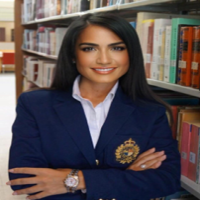
Yeliz Karaca is an associate professor of mathematics, and a senior research professor at the University of Massachusetts Chan Medical School (UMASS), USA; collaborator at Massachusetts Institute of Technology (MIT), USA. She received her Ph.D. degree in Mathematics with the dissertation entitled “Constituting an Optimum Mathematical Model for the Diagnosis of Multiple Sclerosis” from Marmara University, Türkiye in 2012. Among the other awards she has been given, she was also granted the “Cooperation in Neurological Sciences and Support Award” by Turkish Neurology Association as the first mathematician in Türkiye. She also holds a "medical card" as the only mathematician entitled that sort of card. She also holds a medical card as the only mathematician entitled for it. Furthermore, she received the Outstanding Young Scientist Award in 2012 and Best Paper Awards in her specialized discipline in 2012, 2014, 2016, 2017, 2019, 2020 as well as 2023, among the other awards in different categories. Another award of hers is Outstanding Reviewer Award (Mathematics Journal, MDPI) in 2021.
As for some publications, Dr. Karaca has a book entitled "Computational Methods for Data Analysis" published in 2018 by De Gruyter. Another publication is an edited book named "Computational Science and Its Applications" – Lecture Notes in Computer Science (ICCSA 2020, with series 1-7) by Springer. Her edited book is entitled "Multi-Chaos, Fractal and Multi-Fractional Artificial Intelligence of Different Complex Systems", published by Elsevier in 2022. Another work is entitled Computational Science and Its Applications – Lecture Notes in Computer Science (ICCSA 2023, with series I-9) by Springer. Another book is entitled "Intelligent Fractal-Based Image Analysis: Applications in Pattern Recognition and Machine Vision", published by Elsevier in 2024. Besides these, another publication under publication process is a single-authored book, named "Computational and Mathematical Neuroscience, Biology & Medicine: Clinical and Medical Applications" by Wiley-IEEE Press.
She is the Editor-in-Chief of the book series named “Systems Science & Nonlinear Intelligence Dynamics” (https://www.worldscientific.com/series/ssnid) by World Scientific. She has been acting as an editor, guest editor and associate editor in many different issues in SCI indexed journals such as IEEE Access; Electronics, MPDI; International Journal of Big Data and Analytics in Healthcare (IJBDAH); ICCSA2020-Lecture Notes- Springer; Fractal AI-Based Analyses and Applications to Complex Systems, Fractals- World Scientific among others. In addition, she is the leading guest editor of several special issues, one of which is "Fractal-Fractional AI-Based Analyses and Applications to Complex Systems" (Part I, II, III, IV) at Fractals Journal, World Scientific. Some of the other special issues she has been running are as follows: “Advanced fractional calculus, differential equations and neural networks: analysis, modelling and numerical computations", at the Physica Scripta Journal – IOP science; “Advanced Fractals and Fractional Calculus with Science and Engineering Applications: Computing, Dynamics and Control in Complex Systems" (Part I, II) at the Applied Mathematics in Science and Engineering Journal, Taylor&Francis and "Dynamic Diseases: Mathematical Informed Expert and Knowledge Computing Technology-based Computational Medicine in Complex Systems", at Frontiers in Bioscience-Landmark.
Dr. Karaca has also been acting as a chair, co-chair, member of Advisory Scientific Committee and special session organizer of international conferences some of which are as follows: Image Processing, Wavelet and Applications (IWW), International Conference on Computational Science and Its Applications (ICCSA), International Conference on Nonlinear Science and Complexity (ICNSC), The International Conference on Fractional Differentiation and Its Applications (ICFDA), International Conference on Intelligent Information Processing (IETI ICIIP ) and International Conference on Applied and Industrial Mathematics (ICAIM).
Among her affiliated organizations in which she has active scientific roles and involvement with projects are Organization for Women in Science for the Developing World (OWSD); Complex Human Adaptive Organizations and Systems (CHAOS)- University of Perugia, Italy; International Engineering and Technology Institute (IETI) and Institute of Electrical and Electronics Engineers (IEEE, senior member). She is also a member of many associations and charities. She also has one charity she established herself and she is acting as the co-founder and project manager at Yönetim Araştırmaları Derneği (YÖNAD), which is a charity for Management Research, conducting scientific and industry-related projects, seminars, academic work and conferences.
Her research interests include complex systems sciences with applications in various terrains, applied mathematics, advanced computational methods, AI applications, computational (-algorithmic) complexity, fractional calculus, fractals and multifractals, stochastic processes, different kinds of differential and difference equations, discrete mathematics, algebraic complexity, complexity science, wavelet and entropy, solutions of advanced mathematical challenges, mathematical neuroscience and biology as well as well as advanced data analysis in medicine and other related theoretical, computational and applied domains.

Sifeu Takougang Kingni was born in Douala, Cameroon, in 1984. He received the M.Sc. degree in Physics (speciality: Mechanics) in 2008 from the University of Yaoundé I, Cameroon. He received in 2014 a joint Ph.D. degree in Physics (speciality: Mechanics) between the Vrije Universiteit Brussel, Brussels, Belgium and the University of Yaoundé I, Cameroon. His research interests include nonlinear dynamics of semiconductor lasers, electronics circuits, optomechanics, fluid mechanics systems, synchronization of chaotic systems and secure communications.
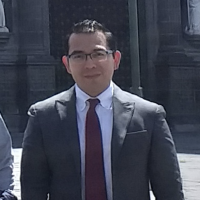
Jesus M. Munoz-Pacheco is a tenured professor in the Faculty of Electronics Sciences at Benemerita Universidad Autonoma de Puebla. He founded and currently leads the research group Fractional-order Systems and Nonlinear Circuits. He has published about 150 scientific works on chaotic systems and fractional-order calculus. He is ranked in the Top 2% global scientist list published by Stanford University-Elsevier in both the Single year list and the Career list for the second consecutive year, 2022 and 2023. Dr. Munoz-Pacheco is a senior member of the National System for Researchers by Conahcyt and the Government of Mexico. Dr. Munoz-Pacheco is also an Associate Editor for Frontiers in Physics, IJNM-Wiley, Frontiers in Applied Mathematics and Statistics, Chaos Theory and Applications, and so on.
Dumitru Baleanu, Department of Computer Science and Mathematics, Lebanese American University, Beirut, Lebanon, e-mail:dumitru.baleanu@lau.edu.lb .
Dumitru is a Professor at the Department of Computer Science and Mathematics, Lebanese American University, Beirut, Lebanon. Dumitru got his PhD from the Institute of Atomic Physics in 1996. His fields of interest include the fractional dynamics and its applications, fractional differential equations and their applications, discrete mathematics, image processing, bio-informatics, mathematical biology, mathematical physics, soliton theory, Lie symmetry, dynamic systems on time scales, computational complexity, the wavelet method and its applications, quantization of systems with constraints, the Hamilton-Jacobi formalism, geometries admitting generic and non-generic symmetries.
Dumitru is a pioneer of the fractional variational principles and their applications in control theory. Dumitru wrote for the first time the fractional Euler-Lagrange equations for fields in the seminal paper entitled “Lagrangian formulation of classical fields within Riemann-Liouville fractional derivatives”, by Dumitru Baleanu and Sami I. Muslih, Physica Scripta ,72 ( 2-3) 119-121(2005). Besides, in the following paper entitled “A Hamiltonian formulation and a direct numerical scheme for fractional optimal control problems”, by Agrawal Om Prakash and Baleanu Dumitru, Journal of Vibration and Control 13 (9-10),1269-1281, we firstly formulated the fractional optimal control problems in terms of Riemann-Liouville fractional derivatives.
Dumitru is one of the co-authors of the seminal paper entitled “Anomalous diffusion expressed through fractional order differential operators in the Bloch-Torrey equation”, by Richard Magin, Dumitru Baleanu, Abdullah Osama and Zhou Xiaohong Joe, Journal of Magnetic Resonance 190 (2), 255-270 (2008),which plays nowadaws a fundamental role within diffusion weighted MRI.
Dumitru had an important role in developing the non-singular operators with Mittag-Leffler kernels and the related modified version as well as their applications in real world phenomena. Also, Dumitru introduced, for the first time, the geometrical meaning of the fractional Mittag-Leffler kernel in the complex domain. The results were published in the paper entitled “Modified Atangana-Baleanu fractional differentıal operators”,by Rabha W. Ibrahim and Dumitru Baleanu,Proceedings of the Institute of Mathematics and Mechanics, National Academy of Sciences of Azerbaijan Volume 48, Special Issue, 2022, Pages 56–67.
We know that dealing with nonsingular kernels it is a very difficult task mainly because their unsolved restrictions at origin. However, in the paper entitled “On an extension of the operator with Mittag-Leffler kernel”, by Mohhamed Al-Refai and Dumitru Baleanu Fractals, 30(51), 2022, Article number 2240129, it was first time formulated an interesting extension of the fractional operator involving the Mittag-Leffler kernel which admits integrable singular kernel at the origin. Besides, new solutions of the related differential equations were reported together with some perspectives from the modelling viewpoint.
Dumitru is co-author of more than 25 books published by Springer, Elsevier and World Scientific. His H index is 108. Dumitru won the following prestigious awards:
- 2023- Award Grigore Moisil given by the Romanian Academy
- 2020-Best Research Award, given by the ITSR Foundation Award 2020 (organized by Institute of Technical and Scientific Research, India) and presented online on September 13th, 2020.
- 2020- Distinguished Researcher Award, Given by the Jaipur Mathematical Society and presented during the 3rd International Conference on Mathematical Modelling, Applied Analysis and Computation (ICMMAAC-20),7-9 August 2020 at JECRC University,Jaipur, India
- 2019-Award for 20 years of successful scientific activity in the field of fractional calculus and its applications by Istanbul Gelisim University, Turkey
- 2019- Obada Prize. The Obada-Prize recognizes and encourages innovative and interdisciplinary research that cuts across traditional boundaries and paradigms. It aims to foster universal values of excellence, creativity, justice, democracy, and progress and to promote the scientific, technological and humanistic achievements that advance and improve our world.
- 2018-ICFDA2018 Award:Innovation in Fractional Calculus. This award is granted to inventors of new patents which address major problems and have a great perspective by use of fractional calculus in real World appplications
Dumitru is the Editor in Chief of Progress in Fractional Differentiation and Applications and he is a Co-editor in Chief of Discontinuity, Nonlinearity and Complexity. Dumitru is member of several editorial boards of journals inxed in Scopus and SCI.
Editorial Board Members

Dr. Iqtadar Hussain is an Associate Professor at Qatar University, Qatar. He holds a Ph.D. in Mathematics with a specialization in Cryptography. His academic and research interests lie primarily in the areas of mathematical cryptography, information security, and related applications. Dr. Hussain is actively involved in teaching, research, and academic service, contributing to the advancement of both theoretical and applied aspects of cryptographic systems.
1. The Lesser Prize 2014 of IAPC "Nauka/Interperiodica" for the best publication in its journals (a series of works devoted to the study of solutions of systems of ordinary differential equations on compact sets).
2. Together with the French mathematician René Lozi, a high-precision numerical method was developed for constructing approximations to chaotic motions of dynamical systems with quadratic nonlinearities.
3. A high-precision numerical scheme for finding approximations to unstable cycles of the Lorenz system is proposed.

Nonlinear Dynamical Systems, Chaos Theory, Control Theory, Fractal

Fatih Kurugollu obtained BSc and MSc in Computer and Control Engineering degrees from Istanbul Technical University, Turkey, in 1989 and 1994, respectively. He was awarded a PhD degree in Computer Science from the same university in 2000. He was employed as a research fellow by the Marmara Research Centre, which is the main governmental research unit of the Turkish Scientific Research Council (TUBITAK) in 1991. He joined the School of Electronics, Electrical Engineering and Computer Science at Queen’s University, Belfast, UK, in 2000, initially as a Post-Doctoral Research Fellow. In 2003, he was appointed to a lectureship at the same department and later on was promoted to Senior Lecturer in Computer Science. He joined University of Derby, UK, as a Professor of Cyber Security in 2016. He has recently been appointed as a full Professor at University of Sharjah, UAE.
His current research interests are centered around AI based Security, Security and Privacy in Internet-of-Things, Security related Multimedia Content Analysis, Big Data in Cyber Security, Homeland Security, Security Issues in Healthcare Systems, Biometrics, Image and Video Analysis.
He has been the principal investigator and co-investigator of several projects funded by EPSRC, Royal Academy Engineering (RAEng), Leverhulme Trust, and Action Medical Research as well as the principal supervisor of several KTP projects funded by Innovate UK. He has supervised 11 PhD projects and he has authored more than 130 publications. He is a Senior Member of IEEE, a member of ACM, a Member of the Associate College of Engineering and Physical Sciences Research Council (EPSRC), and a Fellow of the Higher Education Academy (HEA).


Pubication list: https://www.webofscience.com/wos/author/record/1609312.
Jun Ma received the M.Sc. and Ph.D. degrees from Guangxi Normal Univerisy and Huazhong Normal University for Theoretical Physics,China, in 2003 and 2010, respectively. My current research subjects mainly focus on the topics about pattern selection and control, neuronal network, neurodynamics, memristor, functional neuron models, dynamical control.
Professor Jun Ma has been appointed as Associate editor for Nonlinear Dynamics since 2015. He also serves as an academic editor for PLoS one since July in 2015, and associate editor for Int J Bifurcat Chaos from 2018 to 2023. He is kept as active reviewer for more than 75 international journals indexed in web of science.
The most distinct scientific contribution: 1) A feasible neuron model is proposed to estimate the effect of electromagnetic induction and radiation, and two different mechanism for death and shock in the heart suffered from electromagnetic radiation. 2) A group of functional neuron models are built to detect the temperature, illumination, magnetic field and acoustic wave. 3)He claimed that field coupling accounts for the activation of chemical synapses. 4)He clarified the physical evidences for integral and differential control in dynamical systems. 5)He claimed that the most suitable Lyapunov function should be the sole Hamilton energy function for dynamical systems. 6) A filtering criterion is proposed to explain the biophysical mechanism of frequency selection and wave filtering in auditory and visual neurons.
7)He defined a generic scheme for energy function of memristive maps, and adaptive law is proposed to control mode transition and parameter shift in biophysical neurons. 8)He suggested memristive membrane and neuron models with double capacitive variables for membrane potential of functional neurons.
Prof. Dr. Mehmet Yavuz received BSc degree (2009) from Zonguldak Bulent Ecevit University, Türkiye and both MSc (2012) and PhD (2016) degrees in Applied Mathematics from Balıkesir University, Türkiye. He visited the Department of Mathematics, University of Exeter, U.K., in the period 2019-2020 for postdoctoral research. He is currently a Full Professor at the Department of Mathematics and Computer Sciences, Necmettin Erbakan University, Türkiye. His research interests lie in biomathematics, infectious disease and population dynamics, stochastic analysis, calcium dynamics, fractional-order mathematical models, bifurcation analysis, and dynamical control theory. He has published more than 100 research papers in reputed journals and 60 conference papers as well as 10 book chapters in international books. Moreover, he edited 5 international books published by esteemed publishers. He has received two awards on the most publishing scientist with international cooperation (gold medal) and three awards on most published scientist in the field of science / engineering for his outstanding research work in the field of science. Prof. Yavuz has been listed among the world’s top 2% of cited scientists since 2021, based on citations, h-index, and other metrics, as published by Elsevier & Scopus in collaboration with Stanford University. Apart from being an Associate Editor in several reputed journals, guest editor for more than 10 Special Issues, he is the Editor-in-Chief of the journals “Mathematical Modelling and Numerical Simulation with Applications (ISSN: 2791-8564)” and “Bulletin of Biomathematics (ISSN: 2980-1869)”.
Chaos theory, complexity science, nonlinear dynamics, statistical physics of complex systems, interdisciplinary applications
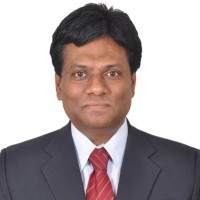
Dr. Sundarapandian is a Senior Professor in the Research and Development Centre at Vel Tech University, Avadi, Chennai, India. He has published over 500 Scopus indexed journal papers, and won national and international awards. He works in Science and Engineering Areas. He is a visiting faculty in many International Universities. He regularly conducts International Workshops in MATLAB, SCILAB, Dynamical Systems, Stability Theory, Data Science, Mathematical Modelling, Scientific Computing, Control Theory, Chaos Theory in International Conferences and International Universities, where he serves as a Visiting Professor.
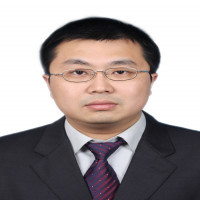

Bocheng Bao (Senior Member, IEEE) received the B.S. and M.S. degrees in electronic engineering from the University of Electronics Science and Technology of China, Chengdu, China, in 1986 and 1989, respectively, and the Ph.D. degree in information and communication engineering, from the Nanjing University of Science and Technology, Nanjing, China, in 2010.
From 2008 to 2011, he was a Professor with the School of Electrical and Information Engineering, Jiangsu University of Technology, Changzhou, China. Currently, he is a Professor with the School of Microelectronics and Control Engineering, Changzhou University, Changzhou, China. In 2013, he visited the Department of Electrical and Computer Engineering, University of Calgary, Calgary, AB, Canada. His research interests include neuromorphic circuits, power electronic circuits, and nonlinear circuits and systems.
Dr. Bao was a recipient of the IET Premium Award in 2018 and selected as the Highly Cited Researcher 2020, 2021, 2022, and 2023 in Cross-Field.

Kengne Jacques was born in Bamougoum, Cameroon, in 1971. He received his M.Sc., and Ph. D. degrees in Electronics in 2007 and 2011 respectively from the Faculty of Sciences/ University of Dschang. From 2010 to 2012, he worked as a lecturer at the Department of Electrical Engineering, IUT-FV/ University of Dschang. From 2012 to 2016 he served as senior Lecturer. In 2016, he was appointed Associate-Professor in the same University. He became full Professor of in November 2021. Prof. Kengne Jacques has authored or co-authored more than 180 journal papers. He also serves as reviewer for renowned international journals including IJBC, Commun Nonlinear Sci. Numer Simulat., Int. Journal of Dynamics and control, Nonlinear Dynamics, Chaos Solitons and Fractals, and IEEE Trans Circuits Systems. His research interest includes nonlinear systems and circuits, chaos, multistability, chaos synchronization with applications. Prof Kengne is an associate editor of Chaos theory and applications.
Marcelo A. Savi is Ph.D. in Mechanical Engineering and Professor at Federal University of Rio de Janeiro (COPPE - Mechanical Engineering) being the Head of the Center for Nonlinear Mechanics. He has published over 500 journal and conference papers, 5 books and about 18 book chapters. Awards and distinctions were received including: UFRJ solemn tribute to the most influential researchers in the world (Top 2%) based on PLOS Biology publication; COPPE Award Giulio Massarani of the Academic Merit; CNPq Researcher level 1A; Scientist of Rio de Janeiro. He is actively involved as advisor of graduate and undergraduate students. He has administrative experience as head of department, graduate coordinator, and university committees. He serves as Editor-in-Chief of the Journal of the Brazilian Society of Mechanical Sciences and Engineering (2024-present) and Associate Editor of some journals, where it is important to highlight: International Journal of Mechanical Sciences (2018-present); Journal of Vibration and Control (2017-present); ASME – Journal of Computational and Nonlinear Dynamics (2019-present). Research interests are related to nonlinear mechanics where it should be highlighted smart material and structures; nonlinear dynamics, chaos and control; biomechanics and ecology.

Prof. Denis Butusov is a Head of Computer-Aided Engineering Dept. at the St. Petersburg Electrotechnical University, Russia, where he is also a Head of Youth Research Institute. He has published extensively in nonlinear systems simulation, specifically numerical methods, geometrical integration, memristive circuits, discrete chaotic maps, and a wide variety of applications, including chaotic sensors, nonlinear systems identification, power systems, robotics and chaos-based cryptography. Dr. Butusov and his collaborators are the authors of the controllable symmetry concept in numerical simulations of nonlinear systems. He also serves as Associate Editor for the Journal of Control, Automation and Electrical Systems.

Dr. Orhan Ozgur Aybar currently works Deputy Director of Piri Reis University Institute of Graduate Education. Most recently, Dr. Aybar held the position of Director of Continuing Education Center (PUSEM), Director of Institute of Graduate Studies at Piri Reis University and Director of Information Technology. He does research in Applied Mathematics and Computational Science, Natural Science, Engineering and Medicine, Programming Languages, Applied Mathematics, Computational Physics, Condensed Matter Physics, Mathematical Physics

Dr. Perkins has co-authored over 30 journal papers in leading journals and graduated 7 PhD students. He has received two of the most prestigious young faculty awards for his research, with approximately $1.6M of external research awards. His background is in nonlinear dynamics, stochastic dynamics, vibrations, and experimental design. Currently, his research interests include oscillator computers, adaptive oscillators, vibrational energy localization, topology optimization, control of flexible/bio-inspired robotics, and music engineering.

Esteban Tlelo Cuautle received a B.Sc. degree from Instituto Tecnológico de Puebla (ITP) México in 1993. He then received both M.Sc. and Ph.D. degrees from Instituto Nacional de Astrofísica, Óptica y Electrónica (INAOE), México in 1995 and 2000, respectively. During 1995-2000 he was with the electronics-engineering department at ITP. In 2001 he was appointed as Professor-Researcher at INAOE. He has been Visiting Researcher in the department of Electrical Engineering at University of California Riverside, USA (2009-2010), in the department of Computer Science at CINVESTAV, México City, México (2016-2017), and Visiting Lecturer at University of Electronic Science and Technology of China (UESTC, Chengdu 2014-2019). He has authored 5 books, edited 12 books and more than 300 works published in book chapters, international journals and conferences. He is member in the National System for Researchers (SNI-CONACyT-México). He serves as Associate Editor in Fractal and Fractional (2022-2023), International Journal of Circuit Theory and Applications (2021-Present), Electronics (2019-Present), Engineering Applications of Artificial Intelligence (2019-Present), Frontiers of Information Technology and Electronics Engineering (2019-2022), IEEE Transactions on Circuits and Systems I: Regular Papers (2016-2023), Integration the VLSI Journal (2013-Present), IEEE Transactions on Circuits and Systems II: Express Briefs (2014-2015), and PLOS ONE (2018-2021). He has organized special sessions in IEEE conferences (ISCAS’15, LATS’15, MWSCAS’14) and has been Chair and Technical Program Committee member of major conferences on circuits and systems. His research interests include integrated circuit design, optimization by metaheuristics, fractional-order chaotic systems, artificial intelligence, security in Internet of Things, and analog/RF and mixed-signal design automation tools.


 Web
Web
Electronics, Embedded System Design, Circuits and Systems, Chaos Theory and Chaos-based engineering applications.
Herbert H.C. Iu received the B.Eng. (Hons) degree in electrical and electronic engineering from the University of Hong Kong, Hong Kong, in 1997. He received the Ph.D. degree from the Hong Kong Polytechnic University, Hong Kong, in 2000. In 2002, he joined the School of Electrical, Electronic and Computer Engineering, The University of Western Australia as a Lecturer. He is currently a Professor at the same school. His research interests include power electronics, renewable energy, nonlinear dynamics, current sensing techniques, and memristive systems. He has published over 200 papers in these areas. He has won two IET Premium Awards in 2012 and 2014. In 2014, he also won the UWA Vice-Chancellor’s Mid-Career Research Award. He received the 2023 IEEE Transactions on Circuits and Systems Guillemin-Cauer Best Paper Award, 2021 IEEE Journal of Emerging and Selected Topics in Power Electronics Prize Paper Award, 2019 IEEE Transactions on Very Large Scale Integration Systems Prize Paper Award, 2023 IEEE Transaction on Power Electronics Paper Award, and the Best Paper Award of 2019 IEEE International Conference on Artificial Intelligence Circuits and Systems. He served as the Editor-in-Chief for IEEE Journal on Selected and Emerging Topics in Circuits and Systems in 2022-2023. He is now Associate Editor for IEEE Transactions on Power Electronics, and IEEE Journal of Emerging and Selected Topics on Power Electronics. He was appointed as IEEE CASS Distinguished Lecturer for 2023-24. He is a co-editor of Control of Chaos in Nonlinear Circuits and Systems (Singapore: World Scientific, 2009) and a co-author of Development of Memristor Based Circuits (Singapore: World Scientific, 2013).

Dr. Zhouchao Wei is currently a full Professor at China University of Geosciences (Wuhan). He received his BSc degree in Applied Mathematics in 2006. In 2011, he received a PhD degree in Applied Mathematics from South China University of Technology. He joined the College of Mechanical Engineering of Beijing University of Technology in 2014 as a Postdoctoral Fellow, and the Faculty of Mechanical Engineering, Technical University of Lodz in Poland in 2015 as a Visiting Researcher. He has also been as a Visiting scholar at the Mathematical Institute, University of Oxford, UK, between 2016 and 2017. His current research interests include the qualitative theory of differential equations, chaos and bifurcation theory. He has been supported by several National Natural Science Funds and has published more than 50 relevant academic papers in SCOPUS-indexed journals. He has been supported by four National Natural Science Funds and the Young Top-notch Talent Cultivation Program of Hubei Province. He was selected into the "Elsevier list of highly cited scholars in China" and "highly cited scientists" by the web of science and clarivate analytics.

Editorial Advisory Board Members
Uğur Erkin KOCAMAZ was born at Yeşilyurt town of Malatya in 1979. He completed his primary and secondary educations at Sakarya Büyükgazi Primary School and Sakarya Anatolian High School, respectively. He started his high school education in Kocaeli Körfez Science High School, and completed it in Sakarya Atatürk High School. He started to Dokuz Eylül University Computer Engineering department in 1996 and graduated in 2001, in which he also received 1 year English preparatory education. He completed his M.Sc. in Computer and Information Engineering department at Sakarya University in 2004, his Ph.D. in Electrical & Electronics Engineering department (in Electronics) at Sakarya University in 2018, and his Ph.D. in Computer and Information Engineering department at Sakarya University in 2024. In December 2003, he started his work career as a Research Assistant in Institute of Science at Sakarya University. In December 2012, he passed to Karacabey Vocational School at Uludağ University as a Lecturer. Then, he became Assist. Prof. Dr. in August 2022 at the same institution. He is still working at there. He is scientifically studying in the fields of data structures and algorithms, artificial intelligence, neural networks, fuzzy logic, neuro-fuzzy, chaotic systems, chaos control, synchronization and chaotic secure communication. He has many publications in the international journals and conferences. He is single. His hobbies are travelling, listening music, watching movies, painting, playing basketball and table tennis.
Doç. Dr. Hakan Kör:
Doğum Yeri ve Yılı: 1981, İskilip
Eğitim:
Anadolu Üniversitesi, Porsuk MYO, Bilgisayar Programcılığı (2002)
Balıkesir Üniversitesi, Necatibey Eğitim Fakültesi, Bilgisayar ve Öğretim Teknolojileri (2006)
Kırıkkale Üniversitesi Fen Bilimleri Enstitüsü, Bilgisayar Mühendisliği Yüksek Lisans (2013)
Kırıkkale Üniversitesi Fen Bilimleri Enstitüsü, Bilgisayar Mühendisliği Doktora (2017)
Kariyer:
MEB Bilişim Teknolojileri Öğretmenliği (2006-2009)
Hitit Üniversitesi Sungurlu MYO Öğretim Görevlisi (2009'dan itibaren)
Sungurlu MYO Müdür Yardımcılığı (2012-2014)
Hitit Üniversitesi Uzaktan Eğitim Merkezi Müdür Yardımcılığı (2014-2016)
Şu anda Hitit Üniversitesi Mühendislik Fakültesi Bilgisayar Mühendisliği Bölümü'nde Doçent olarak görev yapmakta.
Çalışma Alanları:
Veri Madenciliği
Karar Ağaçları Algoritmaları
Büyük Veri ve Analizi
Bulut Bilişim
Yaşam Boyu Öğrenme
Liderlik
Uzaktan Eğitim
Diğer Bilgiler:
İngilizce biliyor
Evli ve iki çocuk babası
Erdinç Avaroğlu was born in Adana, Turkey, in 1979. He received his M.S degree Electrical Electronics Engineering from İnönü University, Malatya Turkey in 2005 and 2007, and Ph.D. degrees Electrical Electronics Engineering from Firat University, Elazig Turkey in 2009 and 2014. Since 2016, he is associate professor in Computer Engineering at Mersin University. His research interests are Cryptology, Random Number Generators, Istatistical Tests, Chaos and Information Security

Managing Editor
Dr. Akif AKGUL was born in Izmir, Turkey. Dr. AKGUL received his B.S. degree in Electronics-Computer Education from Kocaeli University in 2009 and in Electrical-Electronics Engineering from Sakarya University in 2013, M.S. and Ph.D. degrees from Sakarya University in 2011 and 2015, respectively, in Electronics-Computer Education and Electrical-Electronics Engineering. His Ph.D. thesis work was on chaos-based cryptology. He has been to The Institute of Electronics, Communications and Information Technology (ECIT) of Queen's University Belfast, United Kingdom in 2015 as a Visiting Researcher. His current research interests include random number generators, cryptology, data hiding, blockchain, IoRT, chaos-based engineering applications. Currently, he is Associate Professor at the Department of Computer Engineering, Faculty of Engineering, Hitit University, Turkey, where he has been involved in projects concerning the study of chaos-based applications.
Language Editors
Web

Muhammed Maruf Öztürk is currently an Associate Professor at Computer Engineering Department of Engineering Faculty at Suleyman Demirel University. He received his Ph.D. degree in Computer Engineering from Sakarya University. His main interests lie in artificial intelligence in software testing, energy-aware software systems, effort estimation, and hyperparameter optimization. He published several papers coping with software engineering problems.
Technical Coordinator


Managing Editor
Dr. Akif AKGUL was born in Izmir, Turkey. Dr. AKGUL received his B.S. degree in Electronics-Computer Education from Kocaeli University in 2009 and in Electrical-Electronics Engineering from Sakarya University in 2013, M.S. and Ph.D. degrees from Sakarya University in 2011 and 2015, respectively, in Electronics-Computer Education and Electrical-Electronics Engineering. His Ph.D. thesis work was on chaos-based cryptology. He has been to The Institute of Electronics, Communications and Information Technology (ECIT) of Queen's University Belfast, United Kingdom in 2015 as a Visiting Researcher. His current research interests include random number generators, cryptology, data hiding, blockchain, IoRT, chaos-based engineering applications. Currently, he is Associate Professor at the Department of Computer Engineering, Faculty of Engineering, Hitit University, Turkey, where he has been involved in projects concerning the study of chaos-based applications.
Honorary Editorial Board
J. A. Tenreiro Machado was born at 1957. He graduated with ‘Licenciatura’ (1980), PhD. (1989) and ‘Habilitation’ (1995), in Electrical and Computer Engineering at the University of Porto. During 1980-1998 he worked at the Dept. of Electrical and Computer Engineering of the University of Porto. Since 1998 he works at the Institute of Engineering, Polytechnic Institute of Porto, Dept. of Electrical Engineering. Research Interests: Complex Systems, Nonlinear Dynamics, Fractional Calculus, Modeling, Entropy, Control, Evolutionary Computing, Genomics.
Editor-in-Chief
Associate Editors
Sifeu Takougang Kingni was born in Douala, Cameroon, in 1984. He received the M.Sc. degree in Physics (speciality: Mechanics) in 2008 from the University of Yaoundé I, Cameroon. He received in 2014 a joint Ph.D. degree in Physics (speciality: Mechanics) between the Vrije Universiteit Brussel, Brussels, Belgium and the University of Yaoundé I, Cameroon. His research interests include nonlinear dynamics of semiconductor lasers, electronics circuits, optomechanics, fluid mechanics systems, synchronization of chaotic systems and secure communications.

Associate Prof. Dr. Hijaz Ahmad completed his MS in computational mathematics from the Department of Mathematics, COMSATS University Islamabad, Wah Campus. In 2022, he completed his PhD in Computational and Applied Mathematics from the Department of Basic Sciences and Islamiat, University of Engineering and Technology Peshawar, Pakistan and then he started his Post-doc from Lebanese American University, Beirut, Lebanon. His research work is focused on the development and advancement of numerical techniques for finding the numerical solution of mathematical models in the form of partial differential equations and fractional partial differential equations arising in finance, computational biology, and different disciplines of engineering. He has introduced modified variational iteration algorithm-I and modified variational iteration algorithm-II for the numerical solution of nonlinear partial differential equations and fractional iteration algorithm-I for finding the numerical solution of nonlinear non-integer order partial differential equations. The scope of his research is quite broad, covering numerical analysis, fractional calculus, mathematical biology and mathematical physics. Dr Ahmad is included in the World's Top 2% Scientists 2022, 2023 and 2024 (by Stanford University and Elsevier).
Nonlinear Dynamics and Chaos Theory, Application of chaos for secure communication, chaos-based pseudo randomness, cryptography, Chaos-based Cryptography, chaos-based image encryption, control and synchronization of chaos, q-deformed nonlinear dynamical systems
Yeliz Karaca is an associate professor of mathematics, and a senior research professor at the University of Massachusetts Chan Medical School (UMASS), USA; collaborator at Massachusetts Institute of Technology (MIT), USA. She received her Ph.D. degree in Mathematics with the dissertation entitled “Constituting an Optimum Mathematical Model for the Diagnosis of Multiple Sclerosis” from Marmara University, Türkiye in 2012. Among the other awards she has been given, she was also granted the “Cooperation in Neurological Sciences and Support Award” by Turkish Neurology Association as the first mathematician in Türkiye. She also holds a "medical card" as the only mathematician entitled that sort of card. She also holds a medical card as the only mathematician entitled for it. Furthermore, she received the Outstanding Young Scientist Award in 2012 and Best Paper Awards in her specialized discipline in 2012, 2014, 2016, 2017, 2019, 2020 as well as 2023, among the other awards in different categories. Another award of hers is Outstanding Reviewer Award (Mathematics Journal, MDPI) in 2021.
As for some publications, Dr. Karaca has a book entitled "Computational Methods for Data Analysis" published in 2018 by De Gruyter. Another publication is an edited book named "Computational Science and Its Applications" – Lecture Notes in Computer Science (ICCSA 2020, with series 1-7) by Springer. Her edited book is entitled "Multi-Chaos, Fractal and Multi-Fractional Artificial Intelligence of Different Complex Systems", published by Elsevier in 2022. Another work is entitled Computational Science and Its Applications – Lecture Notes in Computer Science (ICCSA 2023, with series I-9) by Springer. Another book is entitled "Intelligent Fractal-Based Image Analysis: Applications in Pattern Recognition and Machine Vision", published by Elsevier in 2024. Besides these, another publication under publication process is a single-authored book, named "Computational and Mathematical Neuroscience, Biology & Medicine: Clinical and Medical Applications" by Wiley-IEEE Press.
She is the Editor-in-Chief of the book series named “Systems Science & Nonlinear Intelligence Dynamics” (https://www.worldscientific.com/series/ssnid) by World Scientific. She has been acting as an editor, guest editor and associate editor in many different issues in SCI indexed journals such as IEEE Access; Electronics, MPDI; International Journal of Big Data and Analytics in Healthcare (IJBDAH); ICCSA2020-Lecture Notes- Springer; Fractal AI-Based Analyses and Applications to Complex Systems, Fractals- World Scientific among others. In addition, she is the leading guest editor of several special issues, one of which is "Fractal-Fractional AI-Based Analyses and Applications to Complex Systems" (Part I, II, III, IV) at Fractals Journal, World Scientific. Some of the other special issues she has been running are as follows: “Advanced fractional calculus, differential equations and neural networks: analysis, modelling and numerical computations", at the Physica Scripta Journal – IOP science; “Advanced Fractals and Fractional Calculus with Science and Engineering Applications: Computing, Dynamics and Control in Complex Systems" (Part I, II) at the Applied Mathematics in Science and Engineering Journal, Taylor&Francis and "Dynamic Diseases: Mathematical Informed Expert and Knowledge Computing Technology-based Computational Medicine in Complex Systems", at Frontiers in Bioscience-Landmark.
Dr. Karaca has also been acting as a chair, co-chair, member of Advisory Scientific Committee and special session organizer of international conferences some of which are as follows: Image Processing, Wavelet and Applications (IWW), International Conference on Computational Science and Its Applications (ICCSA), International Conference on Nonlinear Science and Complexity (ICNSC), The International Conference on Fractional Differentiation and Its Applications (ICFDA), International Conference on Intelligent Information Processing (IETI ICIIP ) and International Conference on Applied and Industrial Mathematics (ICAIM).
Among her affiliated organizations in which she has active scientific roles and involvement with projects are Organization for Women in Science for the Developing World (OWSD); Complex Human Adaptive Organizations and Systems (CHAOS)- University of Perugia, Italy; International Engineering and Technology Institute (IETI) and Institute of Electrical and Electronics Engineers (IEEE, senior member). She is also a member of many associations and charities. She also has one charity she established herself and she is acting as the co-founder and project manager at Yönetim Araştırmaları Derneği (YÖNAD), which is a charity for Management Research, conducting scientific and industry-related projects, seminars, academic work and conferences.
Her research interests include complex systems sciences with applications in various terrains, applied mathematics, advanced computational methods, AI applications, computational (-algorithmic) complexity, fractional calculus, fractals and multifractals, stochastic processes, different kinds of differential and difference equations, discrete mathematics, algebraic complexity, complexity science, wavelet and entropy, solutions of advanced mathematical challenges, mathematical neuroscience and biology as well as well as advanced data analysis in medicine and other related theoretical, computational and applied domains.
Jesus M. Munoz-Pacheco is a tenured professor in the Faculty of Electronics Sciences at Benemerita Universidad Autonoma de Puebla. He founded and currently leads the research group Fractional-order Systems and Nonlinear Circuits. He has published about 150 scientific works on chaotic systems and fractional-order calculus. He is ranked in the Top 2% global scientist list published by Stanford University-Elsevier in both the Single year list and the Career list for the second consecutive year, 2022 and 2023. Dr. Munoz-Pacheco is a senior member of the National System for Researchers by Conahcyt and the Government of Mexico. Dr. Munoz-Pacheco is also an Associate Editor for Frontiers in Physics, IJNM-Wiley, Frontiers in Applied Mathematics and Statistics, Chaos Theory and Applications, and so on.

Editorial Board Members
Dr. Zhouchao Wei is currently a full Professor at China University of Geosciences (Wuhan). He received his BSc degree in Applied Mathematics in 2006. In 2011, he received a PhD degree in Applied Mathematics from South China University of Technology. He joined the College of Mechanical Engineering of Beijing University of Technology in 2014 as a Postdoctoral Fellow, and the Faculty of Mechanical Engineering, Technical University of Lodz in Poland in 2015 as a Visiting Researcher. He has also been as a Visiting scholar at the Mathematical Institute, University of Oxford, UK, between 2016 and 2017. His current research interests include the qualitative theory of differential equations, chaos and bifurcation theory. He has been supported by several National Natural Science Funds and has published more than 50 relevant academic papers in SCOPUS-indexed journals. He has been supported by four National Natural Science Funds and the Young Top-notch Talent Cultivation Program of Hubei Province. He was selected into the "Elsevier list of highly cited scholars in China" and "highly cited scientists" by the web of science and clarivate analytics.
Dr. Iqtadar Hussain is an Associate Professor at Qatar University, Qatar. He holds a Ph.D. in Mathematics with a specialization in Cryptography. His academic and research interests lie primarily in the areas of mathematical cryptography, information security, and related applications. Dr. Hussain is actively involved in teaching, research, and academic service, contributing to the advancement of both theoretical and applied aspects of cryptographic systems.
Esteban Tlelo Cuautle received a B.Sc. degree from Instituto Tecnológico de Puebla (ITP) México in 1993. He then received both M.Sc. and Ph.D. degrees from Instituto Nacional de Astrofísica, Óptica y Electrónica (INAOE), México in 1995 and 2000, respectively. During 1995-2000 he was with the electronics-engineering department at ITP. In 2001 he was appointed as Professor-Researcher at INAOE. He has been Visiting Researcher in the department of Electrical Engineering at University of California Riverside, USA (2009-2010), in the department of Computer Science at CINVESTAV, México City, México (2016-2017), and Visiting Lecturer at University of Electronic Science and Technology of China (UESTC, Chengdu 2014-2019). He has authored 5 books, edited 12 books and more than 300 works published in book chapters, international journals and conferences. He is member in the National System for Researchers (SNI-CONACyT-México). He serves as Associate Editor in Fractal and Fractional (2022-2023), International Journal of Circuit Theory and Applications (2021-Present), Electronics (2019-Present), Engineering Applications of Artificial Intelligence (2019-Present), Frontiers of Information Technology and Electronics Engineering (2019-2022), IEEE Transactions on Circuits and Systems I: Regular Papers (2016-2023), Integration the VLSI Journal (2013-Present), IEEE Transactions on Circuits and Systems II: Express Briefs (2014-2015), and PLOS ONE (2018-2021). He has organized special sessions in IEEE conferences (ISCAS’15, LATS’15, MWSCAS’14) and has been Chair and Technical Program Committee member of major conferences on circuits and systems. His research interests include integrated circuit design, optimization by metaheuristics, fractional-order chaotic systems, artificial intelligence, security in Internet of Things, and analog/RF and mixed-signal design automation tools.
Marcelo A. Savi is Ph.D. in Mechanical Engineering and Professor at Federal University of Rio de Janeiro (COPPE - Mechanical Engineering) being the Head of the Center for Nonlinear Mechanics. He has published over 500 journal and conference papers, 5 books and about 18 book chapters. Awards and distinctions were received including: UFRJ solemn tribute to the most influential researchers in the world (Top 2%) based on PLOS Biology publication; COPPE Award Giulio Massarani of the Academic Merit; CNPq Researcher level 1A; Scientist of Rio de Janeiro. He is actively involved as advisor of graduate and undergraduate students. He has administrative experience as head of department, graduate coordinator, and university committees. He serves as Editor-in-Chief of the Journal of the Brazilian Society of Mechanical Sciences and Engineering (2024-present) and Associate Editor of some journals, where it is important to highlight: International Journal of Mechanical Sciences (2018-present); Journal of Vibration and Control (2017-present); ASME – Journal of Computational and Nonlinear Dynamics (2019-present). Research interests are related to nonlinear mechanics where it should be highlighted smart material and structures; nonlinear dynamics, chaos and control; biomechanics and ecology.
1. The Lesser Prize 2014 of IAPC "Nauka/Interperiodica" for the best publication in its journals (a series of works devoted to the study of solutions of systems of ordinary differential equations on compact sets).
2. Together with the French mathematician René Lozi, a high-precision numerical method was developed for constructing approximations to chaotic motions of dynamical systems with quadratic nonlinearities.
3. A high-precision numerical scheme for finding approximations to unstable cycles of the Lorenz system is proposed.
Dr. Perkins has co-authored over 30 journal papers in leading journals and graduated 7 PhD students. He has received two of the most prestigious young faculty awards for his research, with approximately $1.6M of external research awards. His background is in nonlinear dynamics, stochastic dynamics, vibrations, and experimental design. Currently, his research interests include oscillator computers, adaptive oscillators, vibrational energy localization, topology optimization, control of flexible/bio-inspired robotics, and music engineering.
Web
Electronics, Embedded System Design, Circuits and Systems, Chaos Theory and Chaos-based engineering applications.
Nonlinear Dynamical Systems, Chaos Theory, Control Theory, Fractal
Chaos theory, complexity science, nonlinear dynamics, statistical physics of complex systems, interdisciplinary applications
Pubication list: https://www.webofscience.com/wos/author/record/1609312.
Jun Ma received the M.Sc. and Ph.D. degrees from Guangxi Normal Univerisy and Huazhong Normal University for Theoretical Physics,China, in 2003 and 2010, respectively. My current research subjects mainly focus on the topics about pattern selection and control, neuronal network, neurodynamics, memristor, functional neuron models, dynamical control.
Professor Jun Ma has been appointed as Associate editor for Nonlinear Dynamics since 2015. He also serves as an academic editor for PLoS one since July in 2015, and associate editor for Int J Bifurcat Chaos from 2018 to 2023. He is kept as active reviewer for more than 75 international journals indexed in web of science.
The most distinct scientific contribution: 1) A feasible neuron model is proposed to estimate the effect of electromagnetic induction and radiation, and two different mechanism for death and shock in the heart suffered from electromagnetic radiation. 2) A group of functional neuron models are built to detect the temperature, illumination, magnetic field and acoustic wave. 3)He claimed that field coupling accounts for the activation of chemical synapses. 4)He clarified the physical evidences for integral and differential control in dynamical systems. 5)He claimed that the most suitable Lyapunov function should be the sole Hamilton energy function for dynamical systems. 6) A filtering criterion is proposed to explain the biophysical mechanism of frequency selection and wave filtering in auditory and visual neurons.
7)He defined a generic scheme for energy function of memristive maps, and adaptive law is proposed to control mode transition and parameter shift in biophysical neurons. 8)He suggested memristive membrane and neuron models with double capacitive variables for membrane potential of functional neurons.
Herbert H.C. Iu received the B.Eng. (Hons) degree in electrical and electronic engineering from the University of Hong Kong, Hong Kong, in 1997. He received the Ph.D. degree from the Hong Kong Polytechnic University, Hong Kong, in 2000. In 2002, he joined the School of Electrical, Electronic and Computer Engineering, The University of Western Australia as a Lecturer. He is currently a Professor at the same school. His research interests include power electronics, renewable energy, nonlinear dynamics, current sensing techniques, and memristive systems. He has published over 200 papers in these areas. He has won two IET Premium Awards in 2012 and 2014. In 2014, he also won the UWA Vice-Chancellor’s Mid-Career Research Award. He received the 2023 IEEE Transactions on Circuits and Systems Guillemin-Cauer Best Paper Award, 2021 IEEE Journal of Emerging and Selected Topics in Power Electronics Prize Paper Award, 2019 IEEE Transactions on Very Large Scale Integration Systems Prize Paper Award, 2023 IEEE Transaction on Power Electronics Paper Award, and the Best Paper Award of 2019 IEEE International Conference on Artificial Intelligence Circuits and Systems. He served as the Editor-in-Chief for IEEE Journal on Selected and Emerging Topics in Circuits and Systems in 2022-2023. He is now Associate Editor for IEEE Transactions on Power Electronics, and IEEE Journal of Emerging and Selected Topics on Power Electronics. He was appointed as IEEE CASS Distinguished Lecturer for 2023-24. He is a co-editor of Control of Chaos in Nonlinear Circuits and Systems (Singapore: World Scientific, 2009) and a co-author of Development of Memristor Based Circuits (Singapore: World Scientific, 2013).

Olfa Boubaker received her PhD degree in Electrical Engineering from the National Engineering School of Tunis (ENIT) and Habilitation Universitaire degree in Control Engineering from the National Engineering School of Sfax (ENIS), in Tunisia. She is currently a full professor at the National Institute of Applied Science and Technology (INSAT) of University of Carthage where she is actively engaged in teaching and research in control theory, nonlinear systems, and robotics.
Professor Boubaker has participated in several research projects in sustainable development areas. She supervised (08) theses and (23) Master dissertations and mentored more than (80) engineer graduated projects in the industry. She is the principal author of (10) books, editor of (06) special issues, and the author/co-author of more than 150 peer-reviewed papers with editorial roles in prestigious publications and several international conferences.
René LOZI is emeritus Professor at University Cote d’Azur, Dieudonné Center of Mathematics, France. He completed a PhD in 1975 and the French State Thesis (on chaotic dynamical systems) under the supervision of Prof. Rene Thom (Fields medalist) in 1983.
In 1991, he became Full Professor at University of Nice and IUFM (Institute for teacher trainees). He has served as Director of this institute (2001-2006) and as Vice-Chairman of the French Board of Directors of IUFM (2004- 2006). He is a member of several editorial boards of international journals. In 1977, he discovered a particular mapping of the plane having a strange attractor (now, commonly known as "Lozi map"). Nowadays, his research areas include complexity and emergence theory, dynamical systems, bifurcations, control of chaos, cryptography based on chaos, and recently memristors (physical devices for neurocomputing) and artificial intelligence. He is working in those fields with renowned researchers from many countries. He received the Dr. Zakir Husain Award 2012 from the Indian Society of Industrial and Applied Mathematics during the 12th biannual conference of ISIAM at the University of Punjab, Patialia, (India) in January 2015. He received the C.S. Hsu Award 2024 for distinguished scholars in Nonlinear Dyanamics and Control, issued annually by the Nonlinear Science and Complexity Conferences Series, in August 2024 at the Sichan university of Yibin, China. Since August 2023, he is Vice-President of the International Society of Difference Equations.
Prof. Denis Butusov is a Head of Computer-Aided Engineering Dept. at the St. Petersburg Electrotechnical University, Russia, where he is also a Head of Youth Research Institute. He has published extensively in nonlinear systems simulation, specifically numerical methods, geometrical integration, memristive circuits, discrete chaotic maps, and a wide variety of applications, including chaotic sensors, nonlinear systems identification, power systems, robotics and chaos-based cryptography. Dr. Butusov and his collaborators are the authors of the controllable symmetry concept in numerical simulations of nonlinear systems. He also serves as Associate Editor for the Journal of Control, Automation and Electrical Systems.
Dr. Sundarapandian is a Senior Professor in the Research and Development Centre at Vel Tech University, Avadi, Chennai, India. He has published over 500 Scopus indexed journal papers, and won national and international awards. He works in Science and Engineering Areas. He is a visiting faculty in many International Universities. He regularly conducts International Workshops in MATLAB, SCILAB, Dynamical Systems, Stability Theory, Data Science, Mathematical Modelling, Scientific Computing, Control Theory, Chaos Theory in International Conferences and International Universities, where he serves as a Visiting Professor.
Prof. Dr. Mehmet Yavuz received BSc degree (2009) from Zonguldak Bulent Ecevit University, Türkiye and both MSc (2012) and PhD (2016) degrees in Applied Mathematics from Balıkesir University, Türkiye. He visited the Department of Mathematics, University of Exeter, U.K., in the period 2019-2020 for postdoctoral research. He is currently a Full Professor at the Department of Mathematics and Computer Sciences, Necmettin Erbakan University, Türkiye. His research interests lie in biomathematics, infectious disease and population dynamics, stochastic analysis, calcium dynamics, fractional-order mathematical models, bifurcation analysis, and dynamical control theory. He has published more than 100 research papers in reputed journals and 60 conference papers as well as 10 book chapters in international books. Moreover, he edited 5 international books published by esteemed publishers. He has received two awards on the most publishing scientist with international cooperation (gold medal) and three awards on most published scientist in the field of science / engineering for his outstanding research work in the field of science. Prof. Yavuz has been listed among the world’s top 2% of cited scientists since 2021, based on citations, h-index, and other metrics, as published by Elsevier & Scopus in collaboration with Stanford University. Apart from being an Associate Editor in several reputed journals, guest editor for more than 10 Special Issues, he is the Editor-in-Chief of the journals “Mathematical Modelling and Numerical Simulation with Applications (ISSN: 2791-8564)” and “Bulletin of Biomathematics (ISSN: 2980-1869)”.
Dr. Orhan Ozgur Aybar currently works Deputy Director of Piri Reis University Institute of Graduate Education. Most recently, Dr. Aybar held the position of Director of Continuing Education Center (PUSEM), Director of Institute of Graduate Studies at Piri Reis University and Director of Information Technology. He does research in Applied Mathematics and Computational Science, Natural Science, Engineering and Medicine, Programming Languages, Applied Mathematics, Computational Physics, Condensed Matter Physics, Mathematical Physics
Kengne Jacques was born in Bamougoum, Cameroon, in 1971. He received his M.Sc., and Ph. D. degrees in Electronics in 2007 and 2011 respectively from the Faculty of Sciences/ University of Dschang. From 2010 to 2012, he worked as a lecturer at the Department of Electrical Engineering, IUT-FV/ University of Dschang. From 2012 to 2016 he served as senior Lecturer. In 2016, he was appointed Associate-Professor in the same University. He became full Professor of in November 2021. Prof. Kengne Jacques has authored or co-authored more than 180 journal papers. He also serves as reviewer for renowned international journals including IJBC, Commun Nonlinear Sci. Numer Simulat., Int. Journal of Dynamics and control, Nonlinear Dynamics, Chaos Solitons and Fractals, and IEEE Trans Circuits Systems. His research interest includes nonlinear systems and circuits, chaos, multistability, chaos synchronization with applications. Prof Kengne is an associate editor of Chaos theory and applications.
Fatih Kurugollu obtained BSc and MSc in Computer and Control Engineering degrees from Istanbul Technical University, Turkey, in 1989 and 1994, respectively. He was awarded a PhD degree in Computer Science from the same university in 2000. He was employed as a research fellow by the Marmara Research Centre, which is the main governmental research unit of the Turkish Scientific Research Council (TUBITAK) in 1991. He joined the School of Electronics, Electrical Engineering and Computer Science at Queen’s University, Belfast, UK, in 2000, initially as a Post-Doctoral Research Fellow. In 2003, he was appointed to a lectureship at the same department and later on was promoted to Senior Lecturer in Computer Science. He joined University of Derby, UK, as a Professor of Cyber Security in 2016. He has recently been appointed as a full Professor at University of Sharjah, UAE.
His current research interests are centered around AI based Security, Security and Privacy in Internet-of-Things, Security related Multimedia Content Analysis, Big Data in Cyber Security, Homeland Security, Security Issues in Healthcare Systems, Biometrics, Image and Video Analysis.
He has been the principal investigator and co-investigator of several projects funded by EPSRC, Royal Academy Engineering (RAEng), Leverhulme Trust, and Action Medical Research as well as the principal supervisor of several KTP projects funded by Innovate UK. He has supervised 11 PhD projects and he has authored more than 130 publications. He is a Senior Member of IEEE, a member of ACM, a Member of the Associate College of Engineering and Physical Sciences Research Council (EPSRC), and a Fellow of the Higher Education Academy (HEA).

Editorial Advisory Board Members
Erdinç Avaroğlu was born in Adana, Turkey, in 1979. He received his M.S degree Electrical Electronics Engineering from İnönü University, Malatya Turkey in 2005 and 2007, and Ph.D. degrees Electrical Electronics Engineering from Firat University, Elazig Turkey in 2009 and 2014. Since 2016, he is associate professor in Computer Engineering at Mersin University. His research interests are Cryptology, Random Number Generators, Istatistical Tests, Chaos and Information Security
Doç. Dr. Hakan Kör:
Doğum Yeri ve Yılı: 1981, İskilip
Eğitim:
Anadolu Üniversitesi, Porsuk MYO, Bilgisayar Programcılığı (2002)
Balıkesir Üniversitesi, Necatibey Eğitim Fakültesi, Bilgisayar ve Öğretim Teknolojileri (2006)
Kırıkkale Üniversitesi Fen Bilimleri Enstitüsü, Bilgisayar Mühendisliği Yüksek Lisans (2013)
Kırıkkale Üniversitesi Fen Bilimleri Enstitüsü, Bilgisayar Mühendisliği Doktora (2017)
Kariyer:
MEB Bilişim Teknolojileri Öğretmenliği (2006-2009)
Hitit Üniversitesi Sungurlu MYO Öğretim Görevlisi (2009'dan itibaren)
Sungurlu MYO Müdür Yardımcılığı (2012-2014)
Hitit Üniversitesi Uzaktan Eğitim Merkezi Müdür Yardımcılığı (2014-2016)
Şu anda Hitit Üniversitesi Mühendislik Fakültesi Bilgisayar Mühendisliği Bölümü'nde Doçent olarak görev yapmakta.
Çalışma Alanları:
Veri Madenciliği
Karar Ağaçları Algoritmaları
Büyük Veri ve Analizi
Bulut Bilişim
Yaşam Boyu Öğrenme
Liderlik
Uzaktan Eğitim
Diğer Bilgiler:
İngilizce biliyor
Evli ve iki çocuk babası
Uğur Erkin KOCAMAZ was born at Yeşilyurt town of Malatya in 1979. He completed his primary and secondary educations at Sakarya Büyükgazi Primary School and Sakarya Anatolian High School, respectively. He started his high school education in Kocaeli Körfez Science High School, and completed it in Sakarya Atatürk High School. He started to Dokuz Eylül University Computer Engineering department in 1996 and graduated in 2001, in which he also received 1 year English preparatory education. He completed his M.Sc. in Computer and Information Engineering department at Sakarya University in 2004, his Ph.D. in Electrical & Electronics Engineering department (in Electronics) at Sakarya University in 2018, and his Ph.D. in Computer and Information Engineering department at Sakarya University in 2024. In December 2003, he started his work career as a Research Assistant in Institute of Science at Sakarya University. In December 2012, he passed to Karacabey Vocational School at Uludağ University as a Lecturer. Then, he became Assist. Prof. Dr. in August 2022 at the same institution. He is still working at there. He is scientifically studying in the fields of data structures and algorithms, artificial intelligence, neural networks, fuzzy logic, neuro-fuzzy, chaotic systems, chaos control, synchronization and chaotic secure communication. He has many publications in the international journals and conferences. He is single. His hobbies are travelling, listening music, watching movies, painting, playing basketball and table tennis.
Language Editors
Muhammed Maruf Öztürk is currently an Associate Professor at Computer Engineering Department of Engineering Faculty at Suleyman Demirel University. He received his Ph.D. degree in Computer Engineering from Sakarya University. His main interests lie in artificial intelligence in software testing, energy-aware software systems, effort estimation, and hyperparameter optimization. He published several papers coping with software engineering problems.
Web
Technical Coordinator
Chaos Theory and Applications in Applied Sciences and Engineering: An interdisciplinary journal of nonlinear science
The published articles in CHTA are licensed under a Creative Commons Attribution-NonCommercial 4.0 International License 